The Role of AI in Content Creation: A Strategic Guide for Modern Marketers
Artificial Intelligence (AI) has rapidly transformed how brands approach content. From ideation to distribution, AI is no longer just a support tool; it is becoming a core driver of scalable, data-informed, and high-performing content strategies. For digital-first organisations like LS Digital, understanding the role of AI in content creation is essential to staying competitive in an evolving marketing landscape.
This blog helps you to understand how to leverage AI to create content pieces. EEAT-aligned perspective on AI content generation, how businesses can help create content with AI, and the strategic use of AI content creation tools to optimise for SEO, AEO, and GEO.
What is AI Content Creation?
AI content creation refers to the use of machine learning models and natural language processing (NLP) systems to generate written, visual, audio, or video content. These systems analyse vast datasets, identify patterns, and produce human-like outputs tailored to specific goals.
AI content generation helps marketers produce high-quality content faster, while maintaining relevance and consistency.
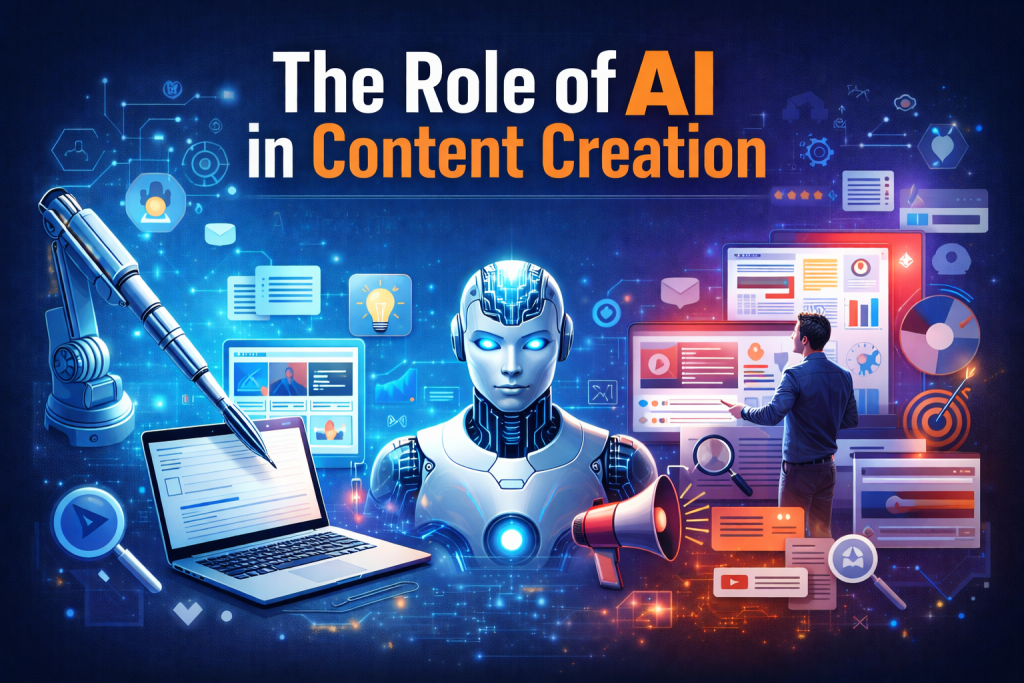
The Role of AI in Content Creation
The role of AI in content creation extends across the entire content lifecycle. It enhances efficiency, improves personalisation, and supports data-driven decision-making.
1. Content Ideation and Research
AI tools analyse search trends, user intent, and competitor strategies to generate topic ideas. This ensures content aligns with what audiences are actively searching for.
• Identifies high-performing keywords
• Suggests trending topics
• Maps content gaps in the market
This is especially valuable for SEO and GEO, where understanding user queries and intent is critical.
2. Content Generation at Scale
One of the most impactful uses of AI is the ability to create content with AI at scale without compromising quality.
• Blog posts and articles
• Product descriptions
• Social media captions
• Email campaigns
AI significantly reduces turnaround time, allowing teams to focus on strategy and creativity rather than repetitive writing tasks.
3. Personalisation and Audience Targeting
AI enables hyper-personalised content by analysing user behaviour, preferences, and engagement patterns.
• Dynamic content recommendations
• Personalised email marketing
• Audience segmentation
This aligns with EEAT principles by ensuring content is relevant, useful, and user-focused.
4. SEO, AEO & GEO Optimisation
AI plays a critical role in optimising content for search engines and answer engines.
• Keyword optimisation and semantic analysis
• Structuring content for featured snippets
• Adapting content for AI-driven search systems
Modern AI tools can suggest headings, FAQs, and structured formats that increase visibility across search platforms.
5. Content Editing and Quality Enhancement
AI assists in refining content to improve readability, tone, and accuracy.
• Grammar and style correction
• Tone adjustment for brand consistency
• Fact-checking and plagiarism detection
This strengthens trustworthiness—an essential component of EEAT.
6. Performance Analysis and Optimization
AI tools track how content performs and provide actionable insights.
• Engagement metrics analysis
• Conversion tracking
• Content optimisation recommendations
This allows continuous improvement based on real data rather than assumptions.
How to Use AI to Generate Content Effectively
While AI is powerful, its effectiveness depends on how it is used. Here is a structured approach to how to use AI to generate content strategically:
Step 1: Define Clear Objectives
Start with a clear goal—brand awareness, lead generation, SEO ranking, or engagement. AI works best when guided by a defined purpose.
Step 2: Use AI for Research and Outlining
Leverage AI to gather insights and create structured outlines. This ensures logical flow and topic coverage.
Step 3: Generate Draft Content
Use AI to produce initial drafts quickly. Focus on speed and completeness rather than perfection at this stage.
Step 4: Human Review and Refinement
Human expertise is essential to ensure accuracy, tone, and brand alignment. This is where EEAT comes into play—adding experience, expertise, and credibility.
Step 5: Optimise for SEO, AEO, and GEO
Refine the content using relevant keywords. Structure content with headings, bullet points, and FAQs to improve discoverability.
Step 6: Monitor and Improve
Use AI analytics tools to track performance and refine content strategy over time.
Popular AI Content Creation Tools
A wide range of AI content creation tools are available to support different aspects of content development:
1. Writing and Text Generation Tools
• AI writing assistants for blogs, emails, and scripts
• Tools for long-form and short-form content
2. SEO and Optimisation Tools
• Keyword research and SERP analysis tools
• Content scoring and optimisation platforms
3. Visual Content Tools
• AI-powered image generation
• Video creation and editing platforms
4. Editing and Proofreading Tools
• Grammar and readability checkers
• Tone and style enhancement tools
Choosing the right mix of tools depends on business goals, content type, and scale requirements.
Benefits of AI Content Generation
1. Increased Efficiency
AI reduces time spent on repetitive tasks, enabling faster content production.
2. Cost-Effective Scaling
Businesses can scale content operations without significantly increasing resources.
3. Data-Driven Insights
AI ensures content decisions are backed by data, improving performance outcomes.
4. Consistency Across Channels
Maintains a uniform tone and messaging across platforms.
Challenges and Considerations
Despite its advantages, AI content creation comes with certain limitations:
1. Lack of Human Experience
AI cannot fully replicate human insight, storytelling, or emotional depth.
2. Risk of Generic Content
Without proper guidance, AI-generated content may lack originality.
3. Dependence on Data Quality
AI outputs are only as good as the data they are trained on.
EEAT in AI Content Creation
For AI-driven content to perform well, it must align with Google’s EEAT framework:
• Experience: Include real-world insights and case studies
• Expertise: Ensure subject matter accuracy
• Authoritativeness: Build credibility through reliable information
• Trustworthiness: Maintain transparency and factual correctness
AI should support not replace human expertise.
The Future of AI in Content Creation
The future of AI content generation lies in collaboration between humans and machines. AI will continue to evolve in areas such as:
• Predictive content strategies
• Real-time personalisation
• Multilingual and global content creation
• Voice and conversational AI
For organisations like LS Digital, adopting AI strategically will enable more agile, scalable, and impactful content ecosystems.
Conclusion
The role of AI in content creation is transformative, offering unprecedented opportunities for efficiency, scalability, and precision. However, the most successful strategies combine AI capabilities with human creativity and expertise.
By understanding how to use AI to generate content, leveraging the right AI content creation tools, and maintaining a strong EEAT foundation, businesses can create high-performing, future-ready content that resonates with both users and search engines.
Frequently asked Questions
1. Can AI create high-quality content?
AI can create high-quality content when guided with clear inputs and refined by human expertise. The best results come from combining AI efficiency with human editing and strategic oversight.
2. Is AI-generated content good for SEO?
Yes, AI-generated content can perform well in SEO if it is optimised for user intent, includes relevant keywords, and follows EEAT principles like accuracy, relevance, and trustworthiness.
What are the best AI content creation tools?
Popular AI content creation tools include writing assistants, SEO optimisation platforms, and editing tools. The best tool depends on your goals, such as blog writing, keyword research, or content optimisation.