Beyond the Click: The New Era of AI-Driven SEO Reporting
For years, search engine optimization (SEO) reporting followed a comfortable, familiar path. We tracked keyword rankings, celebrated spikes in website traffic, and measured success by how many users clicked those classic links on a search results page.
Then, the search landscape changed.
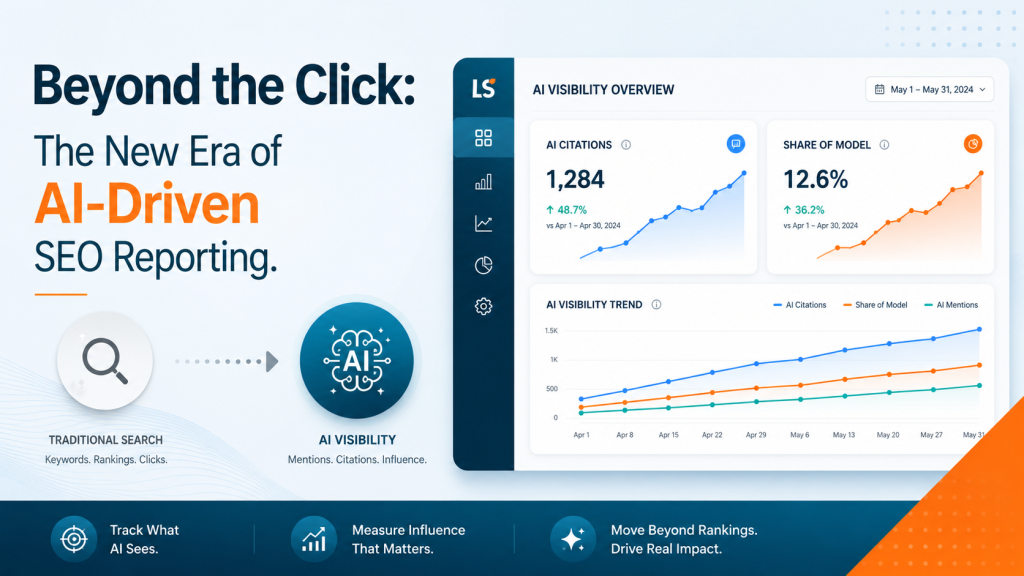
With the rapid rise of tools like Google’s AI Overviews, Perplexity, and ChatGPT, the “zero-click” reality is officially here. AI engines now summarize data to answer user questions directly on the search page, dropping traditional organic click-through rates significantly.
If marketing reports still only focus on traditional website visits, they are missing a massive piece of the puzzle. We have entered the age of Generative Engine Optimization (GEO) reporting. Let’s break down exactly how these new metrics work and how they map to real-world content strategies.
Read Also: AI Search Trends 2026: User Behavior and CTR Impact
Shifting Focus: Traditional SEO vs. New-Age GEO
To prove the real value of marketing today, we have to move past surface-level website analytics. We are no longer just optimizing for an algorithm to rank a webpage. We are optimizing for an AI model to read, trust, and repeat a brand’s information.
The core reporting framework has fundamentally evolved:
| Old SEO Metric | New-Age GEO Metric | What It Actually Measures |
|---|---|---|
| Keyword Rankings | AI Citation Frequency | How often an AI engine references and links your specific content as a trusted source. |
| Share of Voice (SERP) | Share of Model (SoM) | Your brand’s percentage of recommendations inside AI-generated answers compared to competitors. |
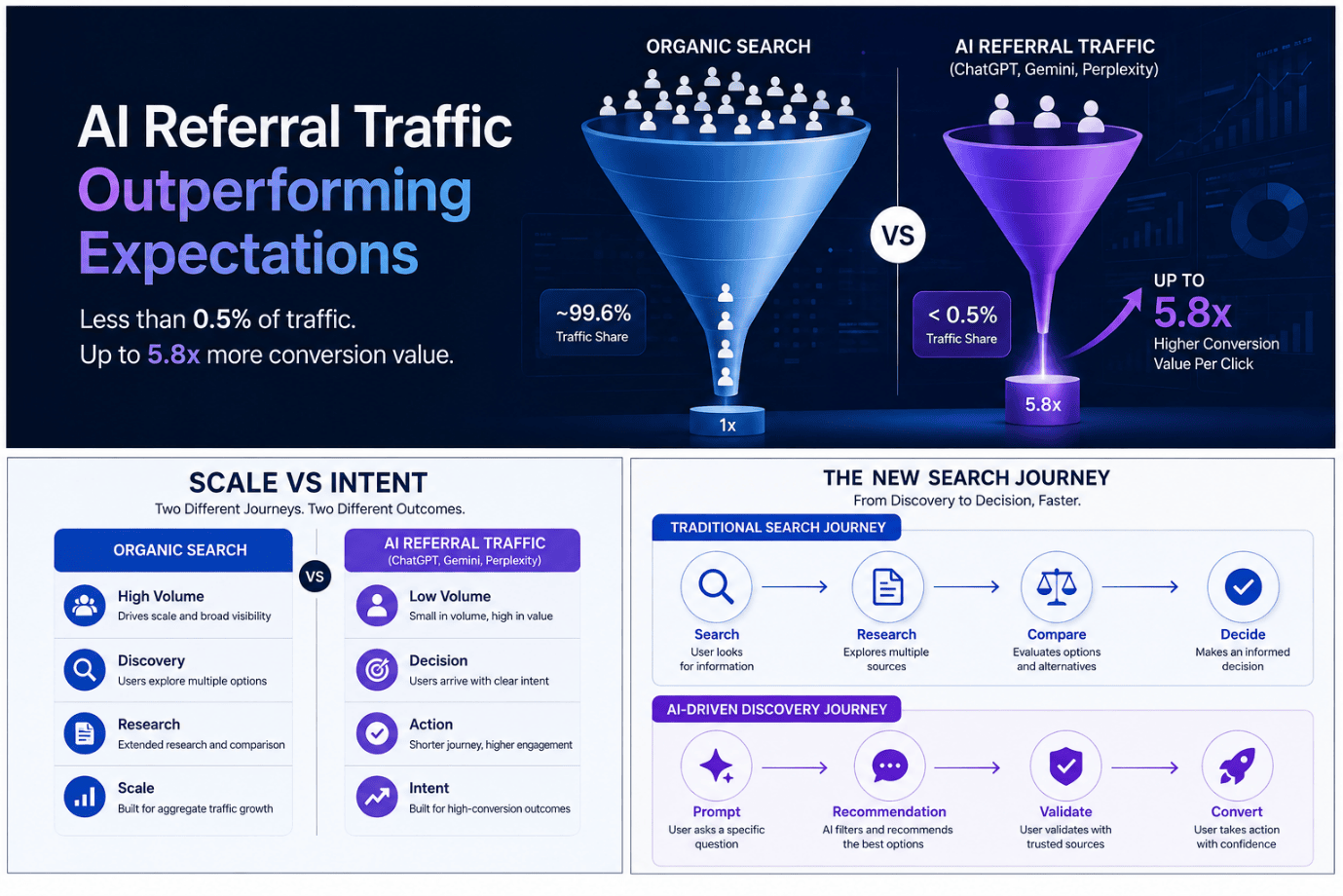
| Organic Sessions | AI Referral Traffic | Direct clicks coming to a website from informational links inside conversational AI platforms. |
| Page Relevance | Information Extractability | How easily an AI scraper can parse website data into simple, standalone facts. |
Read Also: SEO in the Age of AI
Mastering the Metrics: Strategies and Examples
Understanding how these metrics connect directly to content formatting is the key to proving digital authority today. Here is how they function in a conversational search environment.
1. AI Citation Frequency
AI engines do not guess; they look for highly structured, authoritative text. Citation frequency tracks how often an AI engine trusts your content enough to explicitly name it as a source in its footnotes or links.
- The Strategy: Transition brand blogs away from dense paragraphs and toward precise, intent-based headings that mirror how real users phrase questions. Leading each section with a direct, one-sentence answer makes it incredibly easy for an AI to quote your page.
- Generic Example: Imagine an educational guide explaining complex tax guidelines or industry regulations. By breaking down a heavy rule into a simple “What is it / How it works” structure, the content aligns perfectly with an AI’s search behavior, causing the AI engine to lift and cite that definition frequently.
Read Also: AI Citations: Why Brands Get Picked
2. Share of Model (SoM)
Much like “Share of Voice” tracks visibility on a traditional search page, Share of Model (SoM) tracks how often an AI system recalls and recommends your brand when a user asks for top solutions in a market.
- The Strategy: Move beyond simple keyword stuffing. AI models calculate SoM by cross-referencing brand reviews, forum discussions, and digital PR. To optimize this, content must focus on deep comparison guides, expert credentials, and transparent data sheets.
- Generic Example: If a user asks an AI, “What are the most reliable project management tools for remote teams?”, the AI synthesizes reviews from across the web. Brands that actively build their authority through expert thought leadership and comparison charts earn a massive share of those algorithmic recommendations over their competitors.
3. AI Referral Traffic
AI referral traffic measures the actual users who read an AI summary, click on the provided citation link, and land on your website. These are incredibly high-intent buyers because the AI has already pre-qualified them based on their specific needs.
- The Strategy: Target long-tail, bottom-of-funnel conversational queries. Instead of optimizing for broad, hyper-competitive terms, optimize for highly descriptive user scenarios and specific parameters.
- Generic Example: When a consumer asks an AI, “What are the best lightweight, waterproof hiking boots for wide feet under $150?”, general product pages get ignored. However, product descriptions that clearly list those exact technical specifications enable the AI to pull them into product carousels, driving ready-to-buy traffic to the site.
Read Also: Leads in the AI Era
4. Information Extractability
This metric evaluates how cleanly an AI scraper can read a webpage, understand the core data, and repurpose it for a user. If your data is buried deep within narrative text, the AI will likely skip it entirely.
- The Strategy: Use clean, predictable layouts like Markdown tables, bulleted lists, and proper schema markup (like FAQPage or Product schemas). This removes the guesswork for the AI scraper.
- Generic Example: Think about a detailed pricing page or a product comparison grid. When the data is organized into a clean matrix, an AI engine can instantly extract the numbers to answer a user’s question about costs, driving immediate visibility for that brand.
Read Also: The Role of AI in Content Creation
Conclusion
The goal of a modern search strategy is no longer just about ranking first on a page. It is about becoming the definitive answer. By building reporting dashboards that pair traditional traffic data with AI visibility metrics, brands gain a transparent view of their true market influence. The goalposts have moved, and the winning strategies will be the ones that optimize to be cited, extracted, and trusted.
Ready to Future-Proof Your Search Strategy?
Navigating the shift from traditional SEO to AI-driven reporting requires the right framework and expertise. Connect with the LS Digital team today so that your brand remains the definitive answer across the generative web.
Author Bio:

Akshata Jadhav is Group Head – SEO at LS Digital, with 7+ years of experience in driving Organic growth for leading brands. She specializes in GEO (Generative Engine Optimization), and AI-powered search, helping businesses enhance visibility across both traditional search engines and emerging AI platforms.
Linkedin