1.Is your brand ready for zero-click AI search?
AI-driven search is transforming how brands are discovered, with nearly half of Google searches now yielding zero-click, AI-generated summaries. To stay visible, businesses must shift from traditional keyword SEO to creating context-rich, conversational content optimized for generative AI platforms. [Source: The Drum]
2. How connected TV advertising drives search demand
Connected TV (CTV) advertising is emerging as a powerful tool for search marketers, helping to build brand awareness and drive search demand by reaching audiences earlier in the customer journey. With precise targeting, measurable impact, and accessible platforms like YouTube and Microsoft Ads, CTV complements search campaigns by influencing intent before users even begin searching. [Source: Search Engine Land]
3. AI is the engine of business transformation; data is its fuel
Top brands are embracing unified commerce by integrating AI, first-party data, and AI is now central to business transformation, but its success hinges on high-quality, unified data. Organizations that prioritize data readiness and human adoption see faster, more accurate AI deployment and stronger ROI, while those that neglect these foundations risk falling behind. [Source: The Drum]
4. How AI and adtech are fighting India’s festive ad fraud
India’s festive ad season, once plagued by bots and click fraud, is now seeing a shift toward AI-powered, real-time fraud detection systems. With layered verification, behavioural analytics, and collaboration across platforms, the industry is moving from reactive measures to proactive, cybersecurity-style defences. [Source: Excahnge4Media]
5. Brands Are Paying More For Ads That Do Less
Marketing budgets have surged, but their effectiveness is declining, with a growing gap between spend and impact. Shutterstock’s 2025 Creative Impact Report reveals that brands are struggling to connect with audiences due to outdated strategies and a lack of emotional and cultural relevance. [Source: AdWeek]
6. AI In UX: Achieve More With Less
AI can significantly enhance UX workflows when treated like an enthusiastic intern—eager but inexperienced. By giving it clear instructions, defining success, and iterating based on feedback, professionals can use AI for tasks like user research, data analysis, prototyping, and content creation, ultimately saving time and improving output quality. [Source: Smashing Magazine]
7. Here’s How Much Generative AI Is Actually Driving Ecommerce Traffic
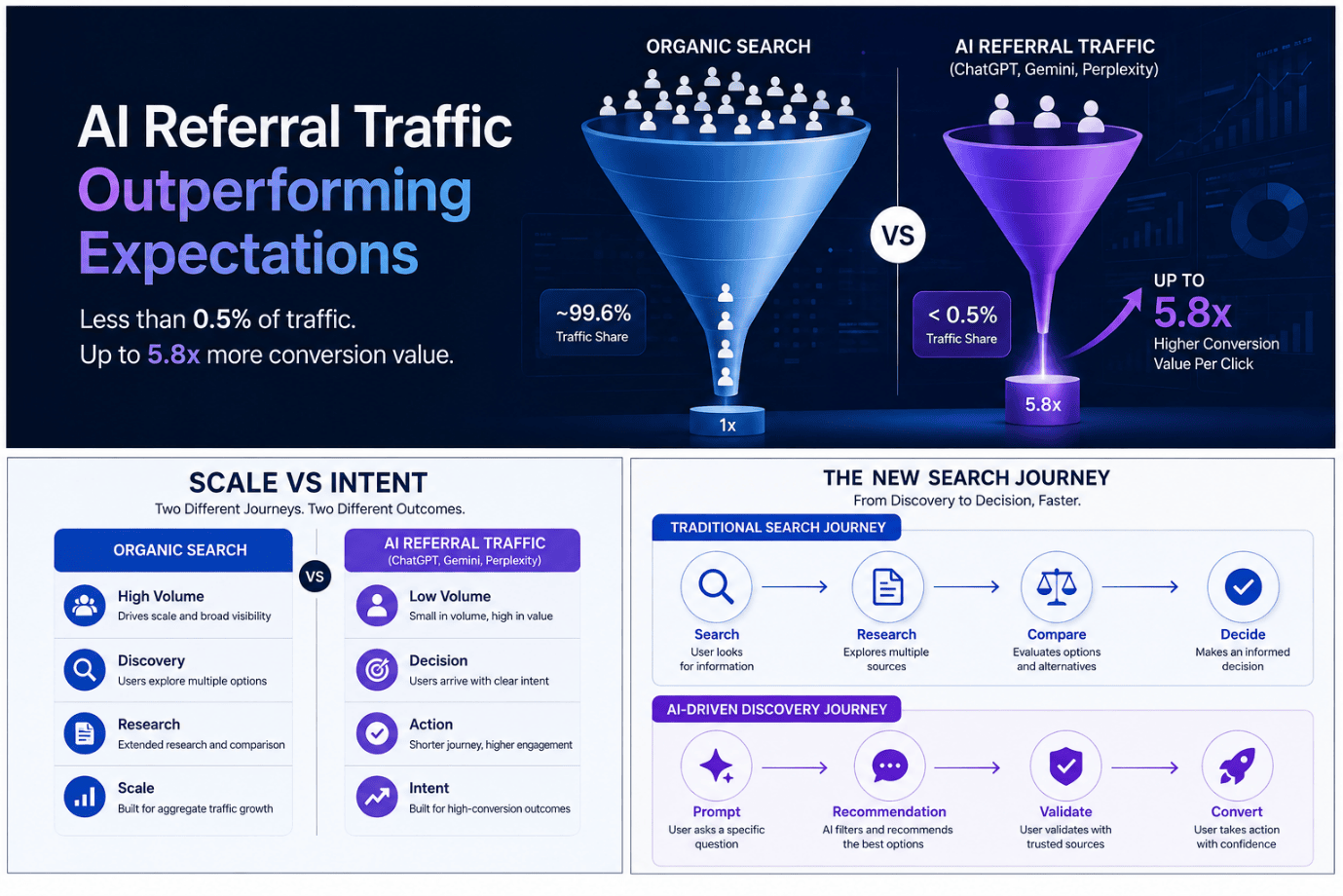
Retailers are increasingly integrating generative AI tools like ChatGPT, Perplexity, and proprietary platforms into their holiday strategies, as consumers shift from traditional search engines to AI-driven shopping experiences. While this boosts product discovery and customer acquisition, it also disrupts conventional search traffic, creating both opportunities and challenges for ecommerce brands. [Source: AdWeek]
8. Is digital-first marketing the secret agent in oral care now?
India’s oral care market is undergoing a transformation, with new-age brands like Perfora and Salt redefining oral hygiene as part of a broader lifestyle and grooming ecosystem. These disruptors are leveraging digital-first marketing, influencer collaborations, and clean-label innovations to target urban, health-conscious consumers, while legacy players like Colgate and Pepsodent are adapting with digital storytelling and product innovation to maintain dominance. [Source: Exchange4Media]
9. How to know if your GEO is working
Generative Engine Optimization (GEO) is not just a rebranded SEO—it’s a brand marketing strategy tailored for AI-driven interfaces. Success in GEO is measured by rising share of search, buyer-intent traffic, prompt visibility across category entry points, and conversion from conversational queries. [Source: Search Engine Land]
10. The Maze of AI in Marketing: What Should We Do First?
AI adoption in marketing is widespread but lacks depth, with most teams struggling to operationalize tools due to poor sequencing, data quality, and integration. The key to progress lies in a disciplined roadmap—starting with foundational elements like clean data, workflow alignment, and governance—before scaling to advanced use cases like personalization and predictive analytics. [Source: CMS Wire]